
Columns
OUT AND ABOUT: Catfish Hole Hushpuppies At Home? It Could Be An Option




If you go to Arkansas Razorback games, or are an Arkansas fan at all, you probably know of The Catfish Hole. It’s the legendary restaurant that has a full compliment of some of the best chicken, seafood, and good Southern fried, cholesterol inducing foods that you will find in this part of the world.
But even though they have an incredible menu, they may be best known for their appetizer – a bowl of some of the best hushpuppies and relish that you will ever put in your mouth. Many have tried to get that recipe from the Catfish Hole – but no one to our knowledge has ever successfully left with it.
The restaurant started out as a small, hole-in-the-wall place in North Little Rock off of JFK Boulevard. The original owners had a small location on the old Highway 71 north of Alma for a number of years, when Pat Gazzola, an attorney who worked in the oil and gas business bought the restaurant along with his wife Janie. The couple then built a much larger and newer location in west Fayetteville on Wedington Drive
Both were immensely successful over the years, and the restaurant for years has been a household name in Arkansas. In recent years, the Fayetteville location became host to Sam Pittman and John Calipari’s call-in shows on the Razorback Sports Network.


Pat died in 2017, and there have been changes. The Alma location closed during Covid, as did a third location built outside of Branson. But the Fayetteville restaurant is still going strong, with plans for a different kind of expansion coming down the pipe.

The Catfish Hole green tomato relish hit Wal-Mart shelves in Northwest Arkansas earlier this week. (PHOTO: LinkedIn/Britain White)


Enter into the equation Britain White, who is Pat and Janie’s son. These days, he is the President/CEO of Catfish Hole LLC and has worked hand-in-hand with his mother in re-opening the Alma store, along with other operations of the company. Earlier this week he posted to social media that the legandary relish that goes along with those world-famous hushpuppies has hit the shelves of at least one Wal-Mart Neighborhood Market in Northwest Arkansas, with more stores to follow.
“Big day for Catfish Hole Fayetteville! We are so excited to partner with Walmart and take a 30+ year local NWA restaurant brand beyond the restaurant. Our green tomato relish is served as part of our unlimited “fixins” along with our tasty coleslaw and our legendary hushpuppies.” White said on LinkedIn. “For years, customers have asked us if we sell the relish and several request us to ship all over the country… Well, we are listening! We delivered our first store this morning to Walmart Neighborhood Market Bentonville on North Main St! Huge thank you to the management team for giving us the opportunity! More NWA stores to come!”
While the relish is a welcome addition to the grocery aisles, the move had inquiring minds such as South Arkansas Now co-owner Grant Merrill wondering if anything else was coming down the pipeline, like maybe the hushpuppies that go with that relish when you sit down at the Catfish Hole.
So naturally, he left a comment of congratulations, with the quick comment, “If y’all would just find a way to sell that hushpuppy batter!”
We’re hoping Mr. White wasn’t planning on keeping anything a secret, but within a few minutes of our company co-owners comment, he replied, “Grant Merrill – working on a frozen option!” and a thumbs up emoji.
You can bet that if there is ever an at home option with the frozen batter as has been implied, Grant will load up his deep fryer and join his colleagues Sandy and Boomer on the Off The Back Porch podcast, and we’ll all be trying Catfish Hole brand hushpuppies for an afternoon with live video included.
Don’t ever say we don’t bring you the stories that matter!!
Congratulations Catfish Hole!


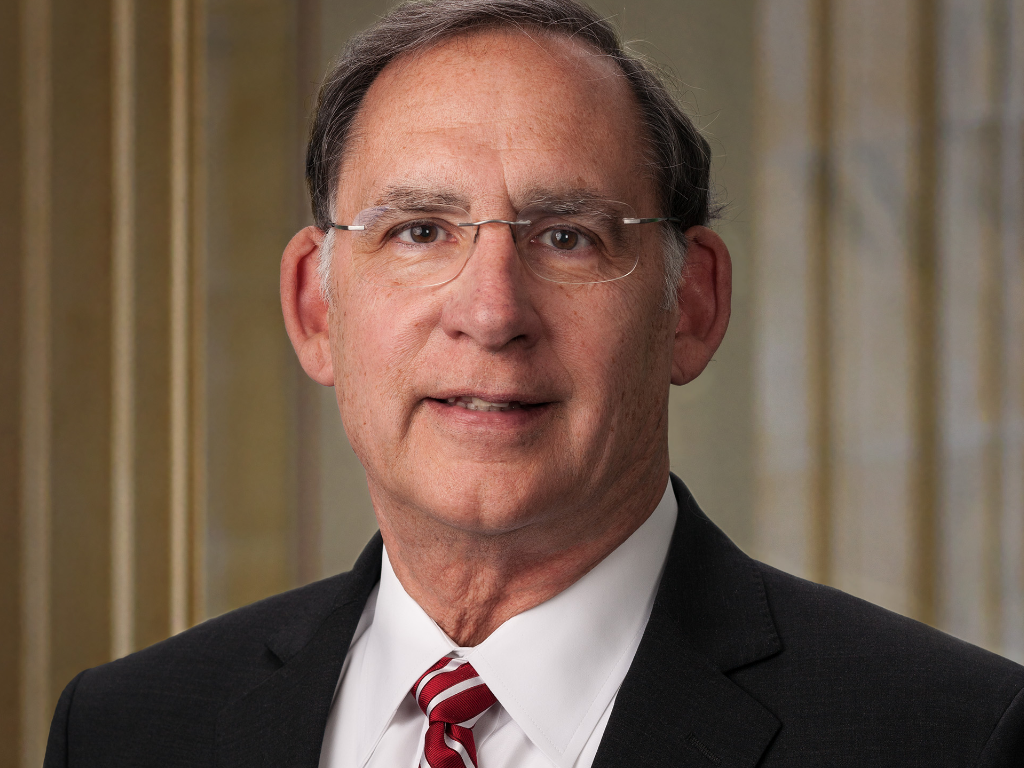


By: Sen. John Boozman, R.-AR
Arkansas is full of entrepreneurs who use innovative ideas, everyday solutions and ongoing challenges to fuel opportunity. This reality is apparent when I return home and visit the excellent small businesses generating economic growth across all regions of our state. As the backbone of our communities and the American economy, I am pleased to advocate policies that make it easier to start, sustain and grow a small business. During the last state work period, I had the pleasure of visiting Red Barn Donuts in Rogers, owned by the hardworking Wiginton family. They are a great example of entrepreneurs turning their passion and family activity into a thriving local business where neighbors can come together and enjoy a delicious treat. Small businesses like theirs not only serve customers –– they help define the character and spirit of the towns they call home. It almost goes without saying that starting and growing a business is not a simple feat. Through grit and tireless dedication, paired with resources such as the Arkansas Small Business and Technology Development Center (ASBTDC), the Wigintons were able to make their dream come true. Their collaboration is a great example of what can happen when public institutions and private businesses work together to achieve success. As a result, jobs are created and enterprises thrive, with far-reaching benefits. This public-private partnership is just one example of the exciting economic development underway in The Natural State. When government, educational resources and private initiative work hand in hand, Arkansas families win. Fortunately, our spirit of hard work and resilience is reinforced by policies that increase access to capital and promote right-sized regulations.
One such policy I am proud to back is Senator Katie Britt (R-AL) and Congressman French Hill’s (R-AR) PROTECTED Act, a bill that would shield small financial institutions and Main Street businesses from burdensome requirements to collect and share personal and private data. Forcing entrepreneurs and community lenders to share identity-based information opens the door for the federal government to pick winners and losers based on factors other than sound underwriting. Rural employers should be focused on growing their businesses and communities, not complying with overly burdensome red tape. Significant federal support was also secured through the Working Families Tax Cuts, landmark legislation that Senate Republicans championed and President Trump signed into law. Provisions that made the small business deduction permanent, reduce regulatory burdens and implemented “No Tax on Tips” put more money back in the pockets of Arkansans. The law will also spur investment by allowing companies to fully expense business equipment more quickly. Providing certainty in the tax code allows job creators to plan for the future with confidence and gives them breathing room to invest, hire and grow without Washington’s cumbersome overreach. By uplifting small businesses, supporting effective public-private partnerships and continuing to fight for pro-growth policies, we can ensure they stay strong. Small businesses are the backbone of rural America, and Congress has a responsibility to ensure the regulatory environment allows for local businesses and communities to flourish. My priority in Washington is to help create an environment that keeps our economy moving forward so Arkansas remains a great place to live, work and raise a family.



Charles Brough, a Mississippi native and former professor at the University of Arkansas, became the twenty-fifth governor of Arkansas in 1917 in a time of change. The early twentieth century was a time promising tremendous changes in the way that Americans worked and lived, and Americans were excited about what the future held. And Americans were calling for a modern system of government to keep up with the changing times. And Brough was ready to deliver.
He quickly enacted school reform measures in the state, creating compulsory attendance laws and expanding vocational education. Brough enacted numerous other reforms. He created the Arkansas Corporation Commission in 1917 to oversee utilities in the state and pushed for a modern highway system in the state. Though the highway plan was bogged down by financial problems and mismanagement at the county level, it did result in 2,500 miles of new highway being constructed. He also pushed through a law in 1917 allowing women to vote in state party primaries, where most elections in the state took place at the time.
When the United States entered World War I in 1917, Brough shifted the focus of his administration to the war effort. He went across the state to raise money for the troops and for the Red Cross. He also created the State Council of Defense to help coordinate production to ensure the troops had all the supplies they needed.
Brough’s popularity was so high that the Republican Party did not even bother fielding a candidate against him in 1918, endorsing Brough’s re-election against Socialist candidate Clay Fulks. Brough swept into a second term with 93% of the vote.
While he hoped that his second term would allow him to build on his earlier successes, the end of the war saw new challenges. He attempted to push through a new state constitution, but the effort failed. In 1919, the nation was hit with a major recession. And in late September, Phillips
After his second term ended in 1921, Brough toured the country on the speaking circuit, promoting the state. And it is Brough who is responsible for what is probably the worst Arkansas joke in history, one he repeated often in these speeches: “Did you know Arkansas is the only state mentioned in the Bible? The Bible says, ‘Noah looked out the Ark-and-saw!’”
In 1928, Brough spoke at the graduation at Central Baptist College in
He unsuccessfully attempted to run for U. S. Senate twice, the last time being in a 1931 loss to Hattie Caraway. In spite of his lack of political success in his years after his governorship, he remained an enthusiastic personality and stayed active in civic causes. In 1934, President Franklin D. Roosevelt appointed him to a special commission to help solve a dispute over the West Virginia border. However, just weeks after his work was completed in 1935, Brough suffered a massive heart attack and died. After his death, he was widely praised for the accomplishments in transportation and education he achieved for the state.
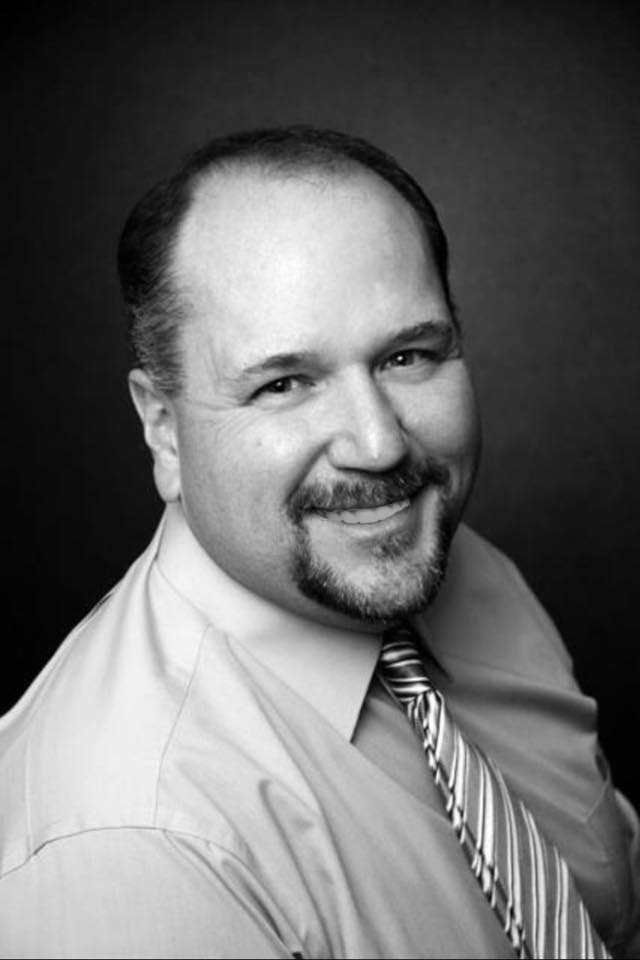
If you will grant me your patience, I will prove why it is a fact that MUSA is staying put in El Dorado.
I moved to South Arkansas 23 years ago. I love it here. The truth of the matter is, I have lived here longer than I have ever lived anywhere else. Another truth, I could live almost anywhere in the United States. There’s nothing that really holds me here against my will. My home is nearly paid for and worth a whole lot more than I paid for it. I have a skillset that allows me to shop my abilities on the open market. I have been very fortunate to be successful everywhere I have ever been. That looks good on a resume and makes me a valued commodity.
In 2012, when I made some major changes in my life, I had to decide if I wanted to stay here, in El Dorado, or go elsewhere. I was offered a very lucrative position at a television station in Missouri (not on camera of course, I mean… Look at me! Right?) I was offered another position in television in Shreveport. I was offered an executive position at a group of radio stations in Northwest Arkansas, as well as in Corpus Christi, Texas; Roswell, New Mexico; Amarillo, Texas; and Denver, Colorado. The compensation at all of those was more than I made here and I was well & fairly compensated for what I did here. I guess if it had been just about money, I would have chased that next venture.
However, it was not! I made lifelong friendships here. I belonged to a great church family here. I was involved here. I was on the board at (then) Medical Center of South Arkansas, El Dorado Golf & Country Club, Chairman of the Parks & Playgrounds Commission, on the board of the El Dorado Crime Stoppers, Salvation Army, Chamber of Commerce, and probably some others that aren’t coming to mind. I had three children and was preparing for life as a single father. My oldest was “up on the hill” in Fayetteville, having just started her college life at the U of A. My two boys were 11 & 12 and doing well in school. Frankly, El Dorado was the only home they knew of. They were both small babies when they moved here. OH! And let’s not forget, THE EL DORADO PROMISE. Yea, that definitely played into my decision to stay and make my life here. So, since it wasn’t about the money and I had all of these reasons to stay, that’s what I did.
A few years ago, I sold my interests in a local business I owned and once again I was faced with the same question. Do I want to stay in El Dorado or do I want to go somewhere else? It wasn’t as easy of a decision this time. Economically, South Arkansas was in the grips of what was happening nationally. Inflation was ripping money out people’s pockets faster than any “would-be robber” could get to it. Murphy Oil had relocated to Houston, I felt like the City was being mismanaged, the population loss was unsettling to say the least, I believe we have some the worst customer service in all of America and I’m not sure how to fix it. (Let’s be honest, I can go to almost any other McDonalds in the USA and my order is right!) I had to sit and put it all in perspective. But once again, I declared El Dorado as my home.
Yesterday’s news about Murphy USA’s layoffs hurt me. I am not trying to be cold but once I put it in perspective, I wasn’t as hurt. For those who were laid off, it is a serious matter and I wish them the best as well as praying for them. However, I know we will continue with our lives and unless those who were affected directly affect us, we probably won’t notice.
There are those people who salivate over the slightest bit of news, gossip, rumor, or innuendo for the sole purpose of spreading fear and negativity. I don’t understand them. It is outside of my line of thought to think negatively. Believe me, it’s not that I’ve lived a Polyannish life. I have faced real hardships, heartbreaks, disappointments and depression. I don’t know if it is because of my faith in Jesus or maybe I just have my head in the sand. Whatever it is, I don’t fall victim to negative thoughts.
South Arkansas Now, of which I am one of the two owners, reached out to Murphy USA with more questions. Here are some of those questions:
- How many employees in El Dorado did this restructuring affect?
- Is Murphy USA bringing employees from the QuickCheck office in New Jersey to El Dorado? (Because that is one of the wild & negative rumors floating around today.)
- Does Murphy USA have any plans that include leaving El Dorado?
- What is Murphy USA doing, specifically, to keep this restructuring from being an economic bombshell to the community.
To their credit, here was their response… word for word:
Thanks for reaching out. Allow me to reassure you, Murphy USA is not stepping back in their support and commitment to El Dorado. This is part of the fabric of the Company and its culture long-term. Please note, employees are not being brought from QuickChek to El Dorado. The impact was felt in both geographies. The Company Statement has the detail you are seeking:
Murphy USA, Inc. recently reorganized as part of a broader effort to strengthen operational effectiveness and position the company for long-term success. Unfortunately, this change included making the difficult decision to reduce the size of our workforce by close to 100, mostly corporate employees, across Murphy USA and QuickChek offices. This includes 65 employees based in El Dorado, Arkansas.
This reorganization was not focused on specific departments and decisions were not made lightly. The reduction was based on thoughtful analysis that ensures we have an agile and efficient organization optimized to support the business now and in the future.
This event does not change our commitment to El Dorado, Arkansas. We are fully committed to the city and its people and have no plans to relocate our headquarters or reduce our presence. (emphasis is mine) In fact, Murphy USA will continue to invest in El Dorado, not only in infrastructure, but in people, partnerships, and long-term growth to ensure the city remains a thriving destination where people prosper.
We are grateful for the contributions of every employee impacted and are committed to treating them with respect and providing resources to support them through this transition.
We remain focused on our mission and confident in the path ahead.
So there it is, straight from Murphy USA. They aren’t leaving! They aren’t shutting down! They aren’t laying off half of their staff. (all of those are rumors I read today.) My plea is this: This move by Murphy USA naturally alarmed some people. So, shouldn’t we all do what we can to bring about calm and help those who are directly impacted? To me, that is a clear and resounding YES. Let’s make sure we are being the best neighbors we can be. Thank you for indulging me, I am getting ready watch Wildcat Football!
For many people, family means everything. In Arkansas politics, it has often been an important springboard for careers. One particular family duo, Ben and Fadjo Cravens of Fort Smith, ended up serving a combined eleven terms in Congress in the early twentieth century. The father-son team had a great impact on developing southern and western Arkansas.
William Ben Cravens was born in Fort Smith in 1872. His father, William Murphy Cravens, had served as a Confederate cavalry officer during the Civil War and had established a respected law practice in Fort Smith after the war. It was known to be a close and loving family.
Cravens came from a family of good means. He was cousin to Jordan Cravens, a Clarksville attorney and Confederate veteran who served three terms in Congress from 1877 to 1883. He attended Louisville Military Academy in Kentucky as well as the prestigious Staunton Military Academy in Virginia. He then earned a degree from the University of Missouri.
William Cravens became an attorney in 1893 and joined his father’s practice in Fort Smith. He was an ambitious man and won election as city attorney in 1898. Four years after that, he was elected prosecuting attorney for the Twelfth Judicial District, which included Sebastian County.
In 1906, he was elected to represent the Fourth District in Congress, which took up most of Southwest Arkansas at the time. He won re-election by a wide margin in 1908, and he was re-elected without opposition in 1910. He served on the Military Affairs committee and the Indian Affairs Committee as well as the Congressional Red River Improvement Association, hoping river improvements would help the regional economy. Distractions, however, kept him from attending many votes, and his attendance record was much lower than average. In 1912, he was defeated for re-nomination. With a growing family in Fort Smith, he contented himself with a relatively quiet life as an attorney.
His successor, Otis Wingo, a DeQueen attorney, died in office in 1930. His wife, Effigenie Wingo, was elected to replace him, the first woman elected to Congress from Arkansas. In 1932, she declined to seek re-election. With his family grown and the Great Depression devastating millions of Americans, Cravens decided to re-enter politics. He jumped into the race to reclaim his seat in Congress.
Cravens won the Democratic nomination easily and faced no opposition in the general election. He was unopposed in each general election in his second round in Congress, winning without opposition in 1932, 1934, and 1936. Now 60 years old, he energetically served in Congress, actively supporting President Franklin D. Roosevelt’s package of New Deal reforms, from farm subsidies to rural electricity to Social Security. He served on committees overseeing mining, elections, and flood abatement. He was elected to his seventh term in November 1938, but tragedy intervened. Cravens died suddenly in January 1939 in Washington, DC, at the age of 66.
William Fadjo Cravens, usually just referred to as “Fadjo,” was crushed by his father’s death, but he jumped into the race to succeed him. He had enlisted in the navy in World War I. After his honorable discharge, he returned to study law at Washington and Lee University in Virginia and became an attorney by 1920. He returned to Fort Smith to practice law, serving at his father’s side just like his father before him. Similarly, he became Fort Smith city attorney, running the office for ten years. He won the special election to Congress in 1939. Most of his time in Congress dealt with World War II. He actively supported the war effort and made sure that defense contracts came to the district, most notably to Camden, Pine Bluff, El Dorado, and Fort Smith as well as expansion of Fort Chaffee.
Fadjo Cravens was unopposed in each general election afterward. He was more moderate in his views than his father overall but was a popular and effective representative overall. He declined to run for re-election in 1948.
The younger Cravens returned to Fort Smith and served as an attorney for many more years. He died in 1974 at his home in Fort Smith. Though his own children did not become members of Congress themselves, his son, William Fadjo Cravens II, became a noted businessman in Fort Smith and served as a delegate to the state’s ill-fated constitutional convention in 1969.


Off The Back Porch – Episode 48 (March 6, 2026) with special guest, Mark Givens

Father Bob Allen Charitable Clinic announces new APRN

“CLOSE RACES” END AS LANDSLIDES

Election Watch 2026 To Air After Polls Close

SouthArk Implements “One Pill Can Kill” Initiative

El Dorado Student Musicians Take Top Honors At Recent Contest

EL DORADO HIGH SCHOOL BEGINS SEARCH FOR NEW HEAD FOOTBALL COACH
“CLOSE RACES” END AS LANDSLIDES

Susan Harper, El Dorado

One Killed In Ouachita County Car Accident
Father Bob Allen Charitable Clinic announces new APRN

VIDEO: Spirited City Council Meeting in El Dorado


Susan Harper, El Dorado
Susan Hurley Harper, 69, of El Dorado, Arkansas passed away peacefully on Tuesday, February 17, 2026 surrounded by her loving...


Helen Hastings, El Dorado
Helen Janell Hastings, 91, of El Dorado, passed away on Saturday, February 21, 2026 at Timberlane Health and Rehabilitation. Born...


Mary Alice Carelock, North Little Rock
Mary Alice Carelock, 95, of North Little Rock, formerly of El Dorado, passed away Wednesday, February 18, 2026, in North...


Helen Orren, Smackover
Helen Orren, 86, passed away Tuesday February 10,2026. Services will be held Friday February 13,2026 at Perry’s Funeral Chapels. Visitation...


Kyle Gleghorn, El Dorado
Kyle Reed Gleghorn, 74, of El Dorado, Arkansas passed away February 10 at Timberlane Health and Rehabilitation. Kyle was born...


Camden Fairview Hires New Football Coach
CAMDEN — The Camden Fairview School Board approved the hiring of Jamie Carter as the next Camden Fairview Cardinal...


West Side Christian Warriors and Lady Warriors Dominate at HCAA Quarter Finals in Ft. Smith
The West Side Warriors of El Dorado hosted the Regional Heartland Christian Activities Association (HCAA) Regional Basketball Tournament for boys...


El Dorado Cheer Wins National Championship
ORLANDO, FL – El Dorado High School’s cheerleading team claimed a national championship on Sunday, winning the Division II title...


Hogs Roll Past Vanderbilt In Statement Win
FAYETTEVILLE — No. 20 Arkansas delivered one of its most complete performances of the season Tuesday night, dominating No. 15/14...


Muleriders Set For In-State Road Trip
MAGNOLIA, Ark. — Southern Arkansas men’s basketball (7-9, 4-6 GAC) hits the road for a pair of key in-state matchups...


Funeral Arrangements Set For Wife Of Arkansas Congressman
ROGERS — Steve Womack announced the passing of his wife, Terri Lynn Williams Womack, who died Sunday at Circle of...


Auto Sales Giant Closes Five Arkansas Dealerships
ROGERS – America’s Car-Mart has announced the closure and consolidation of several Arkansas dealership locations as part of a broader...


$6 Billion Data Center Hub Planned in Pulaski County
LITTLE ROCK — AVAIO Digital Partners has announced a major new data center campus near Little Rock in Pulaski County,...

Texarkana Man Killed In I-49 Crash
TEXARKANA — A 22-year-old Texarkana man was killed Friday afternoon when his motorcycle collided with a cable barrier on I-49....


Wrong Way Driver Killed In Accident Near Russellville
RUSSELLVILLE — A wrong-way crash on Interstate 40 westbound at mile marker 78 claimed the life of a Dover man...


El Dorado School Board Recognizes Students, Celebrates Academic Gains, Reviews District Business
EL DORADO — The El Dorado School District Board meeting opened with President Vicky Dobson calling the meeting to order,...


El Dorado School Board Approves Bonuses, New Buses, and Recognizes Outstanding Staff and Students
The El Dorado School Board met Monday night for its December meeting, approving a round of one-time Christmas bonuses for...
School Board Gives Honors and Commends FFA
El Dorado, AR—The El Dorado School District (ESD) continues to showcase its strength through student achievement, dynamic academic programs, and...

El Dorado School District Reviews Six-Year Facilities Plan, Recognizes Student Success, and Reports Academic Gains
El Dorado, AR: The El Dorado School Board convened for the monthly meeting to discuss the district’s 2026 Six-Year Master...
El Dorado School District Votes Down Alternative Calendar for 3rd Time
EL DORADO – The El Dorado School Board conducted a special-called meeting on Monday, September 22, 2025, to discuss two key...


El Dorado School Board Reviews Back-to-School Readiness, Staffing Success, and Major Fiscal Moves
EL DORADO – With the first day of school just around the corner, the El Dorado School Board meeting Monday evening...
-
News5 months ago
One Killed In South Arkansas Crash
-
News6 months ago
El Dorado Man Killed In US 82 Accident
-
News1 year ago
El Dorado man killed in single vehicle crash
-

 News2 months ago
BREAKING NEWS: President Trump Nominates Union County Man To Federal Bench
-
Regional News9 months ago
Unlicensed Teen, Adult Relative Charged With Manslaughter In 150 MPH Fatal Crash
-

 Regional News1 year ago
Radio DJ known as “Roy D. Mercer” passes away Friday
-

 Obituaries11 months ago
Parker Hammett, Addis LA
-
News8 months ago
South Arkansas Woman Killed In Single Car Crash